
On September 1, 2023, we began an almost month-long trip across Uzbekistan (including the autonomous republic of Karakalpakstan), a country that has fascinated me for over a decade. And what a trip it was! I thought I would share some of the highlights of our trip to Uzbekistan in this post.
But first…a few misconceptions.
Almost everyone I told—from co-workers to the pharmacist who administered our hepatitis and typhoid vaccinations—was shocked when I told them we were travelling to Uzbekistan. “Uzbeki-what-a-stan?” was the usual response. Only a select few in Canada had heard of Uzbekistan; most thought it was synonymous with Afghanistan (the suffix “stan” means “land of settlement,” and there are numerous “stans” common in English besides Afghanistan: Kazakhstan, Kyrgyzstan, Tajikistan, Turkmenistan, Uzbekistan, Karakalpakstan, Pakistan, Tatarstan, Kurdistan, Balochistan, Dagestan, Bashkortostan, etc.). The next question inevitably was, “Why would you want to go there?” instead of the Caribbean or some other typical North American travel destination.
I always expected this kind of reaction; Canadians and Americans are among the most geographically illiterate people in the world. Anything outside Canada, the US, or some uncultured, neocolonial resort is too distant to comprehend. Thus, it will surprise many Canadians and Americans that Uzbekistan isn’t only a destination for the highly adventurous explorer. Wherever we were, be it the Afghanistan border or the remotest regions of Karakalpakstan, we were never alone as tourists. Most Canadians and Americans can’t pronounce Uzbekistan, much less know where it is. However, we encountered dozens of tourists from Scotland, England, Germany, Italy, China, Russia, Spain, Slovakia, the Netherlands, and France. Perhaps, like citizens of these other countries, Canadians and Americans will one day learn there is more to the world than themselves.
Impressions of Canada vs. Uzbekistan
As described above, most Canadians have never heard of Uzbekistan, and once informed that it exists, they assume it is synonymous with Afghanistan, or at least think it is some other Third World backwater state. However, throughout our trip through Uzbekistan, including almost all the major cities—Tashkent, Kokand, Fergana, Margilan, Namangan, Termez, Samarkand, Bukhara, Urgench, Khiva, Nukus, Muynak, Navoi, etc.—we were struck without how Third World and backward Canada is compared to Uzbekistan.
Most Canadians will be shocked to read this because, as descendants of colonial settlers who committed genocide against the indigenous peoples and virtually enslaved the Chinese to build the Canadian Pacific Railroad, Canadians are used to thinking Canada is the center of the universe when in fact Canada compares poorly against other countries in many indicators. For example, The Commonwealth Fund’s 2021 report comparing the healthcare systems of 11 developed countries ranked Canada second last, ahead of only the US. According to the Canadian Poverty Institute, Canada ranked 21 out of 27 OECD countries in terms of poverty in 2011, with 1 in 7 or 4.9 million living in poverty, including 1.34 million children. Another report found that Canada’s largest cities fall behind urban centers worldwide in sustainable transportation.
People aren’t wealthy in Uzbekistan like most Canadians think of wealth (e.g., bigger cars, fancier houses, more shopping opportunities, etc.). However, nowhere did we see the kind of neoliberal decay and despair so prevalent in Canada.
All the major cities in Uzbekistan are clean and well-swept, full of trees, parks, public washrooms, and recreational facilities, with virtually no trash or garbage anywhere and no “skid rows” such as exist in Vancouver, Winnipeg, and other major cities in Canada.
The public transit system in Uzbekistan makes transit look shameful in Canada. Tashkent, Bukhara, and Samarkand are connected via a high-speed rail system, something Canada doesn’t have anywhere. The buses in the major cities are brand-new, eco-friendly, and emission-free, and bus drivers don’t fear being stabbed like in Canada. The metro in Tashkent is on time, clean, and safe, a significant difference from Toronto’s “overcrowded, underfunded, unreliable, and dangerous transit” system.
Even the airline, namely Uzbekistan Airways, far surpasses Canadian airlines, among the worst in the world. We took two 50-minute, economy-class flights on Uzbekistan Airways, first from Tashkent to Termez and again from Nukus to Tashkent, and each flight had excellent free food and beverage service and in-flight entertainment options. In contrast, our WestJet flight from Winnipeg to Toronto (2 hours, 25 minutes) offered nothing, and our Air Canada flight from Vancouver to Winnipeg (2 hours, 45 minutes) provided slightly more, but all for a fee.
Uzbekistan’s telecommunications infrastructure is substantially more advanced than Canada’s. My mother lives in Woodlands, a small farming community an hour north of Winnipeg, a city of almost 800,000, and there is no broadband Internet or cellular service there. However, in Qubla-ustyurt, a small town in the Karakalpak desert, there is 5G cellular service and accessible high-speed Internet.
Woodlands, MB, minimal to non-existent cellular service and high-speed Internet
Qubla-ustyurt, Karakalpakstan, widespread 5G cellular coverage and accessible high-speed Internet.
Even the less tangible manifestations of Canada’s toxic individualism, consumerism, and neoliberalism were absent in Uzbekistan. For example, Uzbekistan has a strong collective sense, and everyone helps everyone. I witnessed several men lifting a car to change the tire of a stranded vehicle; our driver stopped to help a stranded vehicle and refused to leave until the other driver’s car started; and when we were afflicted with horrible diarrhea in Karakalpakstan, a local family brought us in and cooked us a nice meal to help settle our digestive systems. In Canada, it’s everyone for themselves, a reality I am too familiar with because Canadians are often surprised that I have all the equipment I need in my Jeep to help stranded motorists and that I help random strangers. As for toxic consumerism, there is virtually no fast food in Uzbekistan, including McDonald’s, Wendy’s, A&W, KFC, etc. Instead of a barrage of advertisements for genetically modified garbage, healthy, organic food is cheap and readily available everywhere. When one considers the cost of healthy, organic food in Canada, I think this is a significant advancement than in Canada.
Overall, our month in Uzbekistan was a much-needed relief from the neoliberal, capitalistic rot that is so widespread in Canada. In many respects, Canada, not Uzbekistan, seemed like a Third World, backward state. The fact that Canadian Parliamentarians gave a standing ovation to a WWII-era Nazi that served in Hitler’s SS 14th Waffen Division really says a lot about the state of Canada.
Our Trip
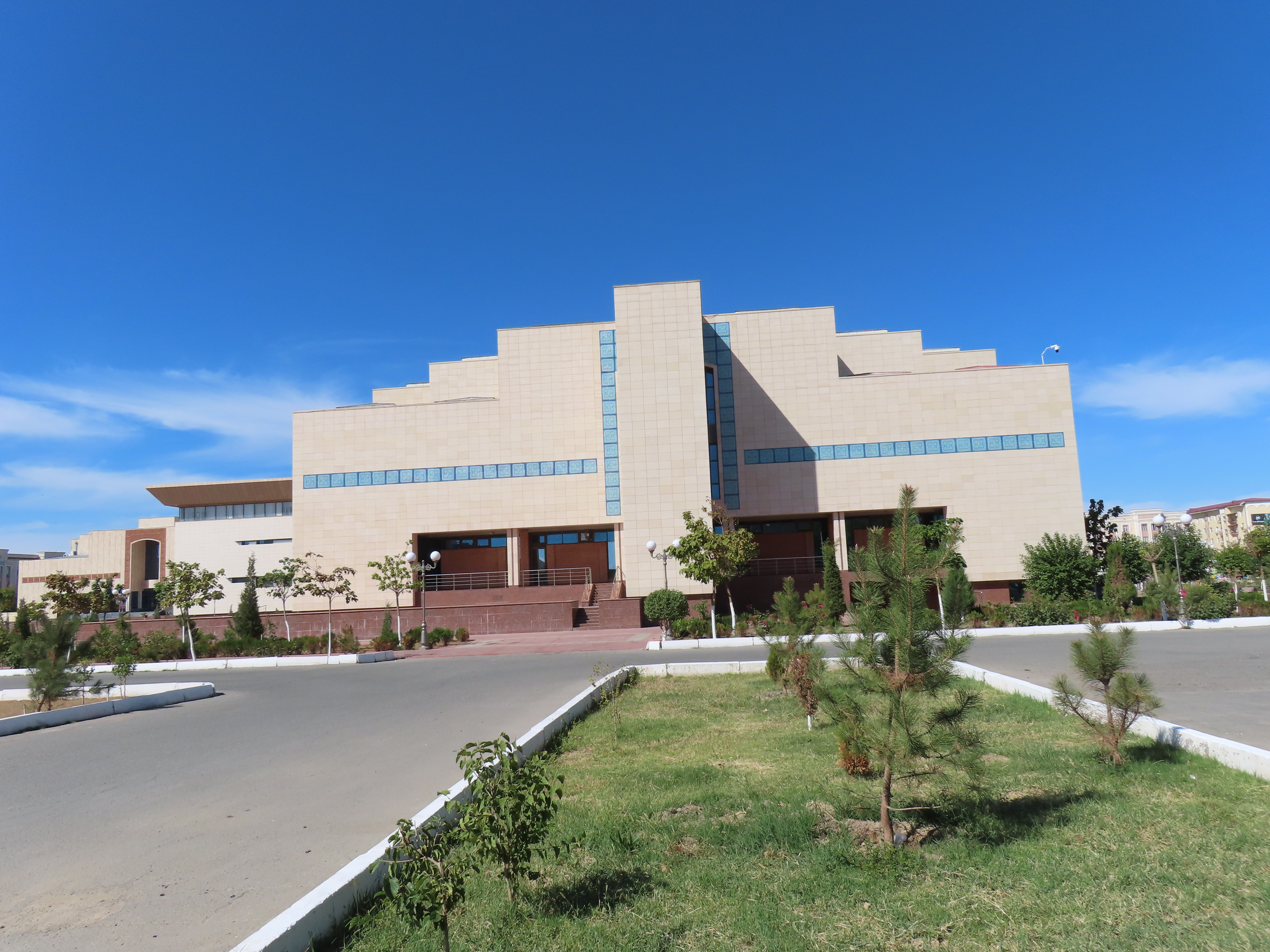
Our itinerary was comprehensive even compared to other tourists. We began our trip to Uzbekistan with an Air Arabia flight to Tashkent, the capital of Uzbekistan, from Abu Dhabi, the capital of the United Arab Emirates. Tashkent is a beautiful and welcoming city that makes most Canadian cities look like trash. Unfortunately, we could not see the major sites, like the State Museum of History, because we arrived on a Monday. Still, walking around such a beautiful city like Tashkent was enjoyable.
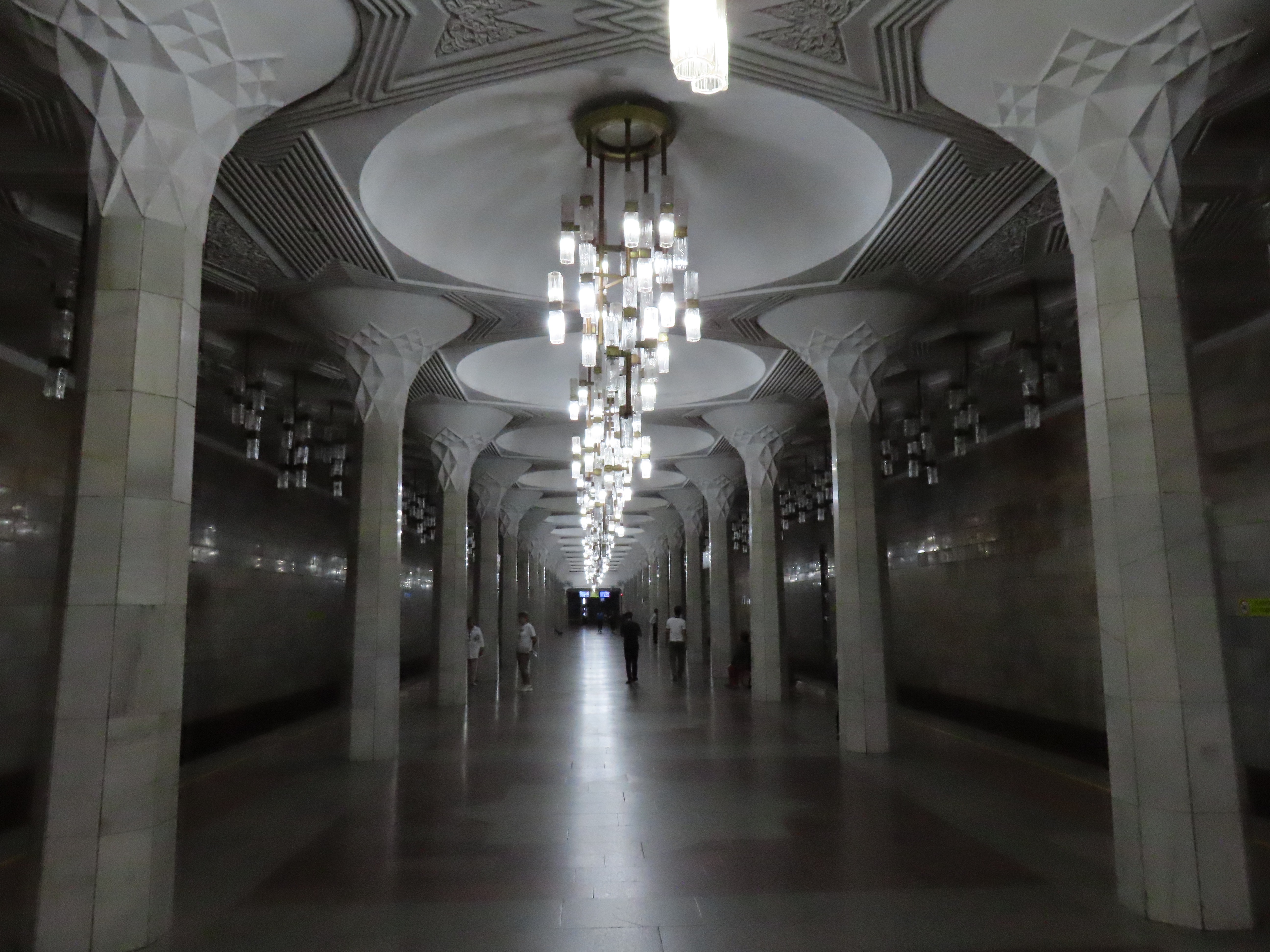

After Tashkent, we began the long, winding drive through rugged mountains to the Fergana Valley, a fertile and historically and culturally significant region in the heart of Central Asia. We visited the Palace of Khudáyár Khán, the last ruler of the Kokand Khanate, and a ceramics workshop in Rishton before stopping for the night in a hotel in Fergana. On our way back to Tashkent, we visited a silk-weaving workshop in Margilan and the Akhsikath Archeological Site, a fortified city from the 3rd century BCE that played an essential role in the life of Babur, founder of the Moghul Empire in India.

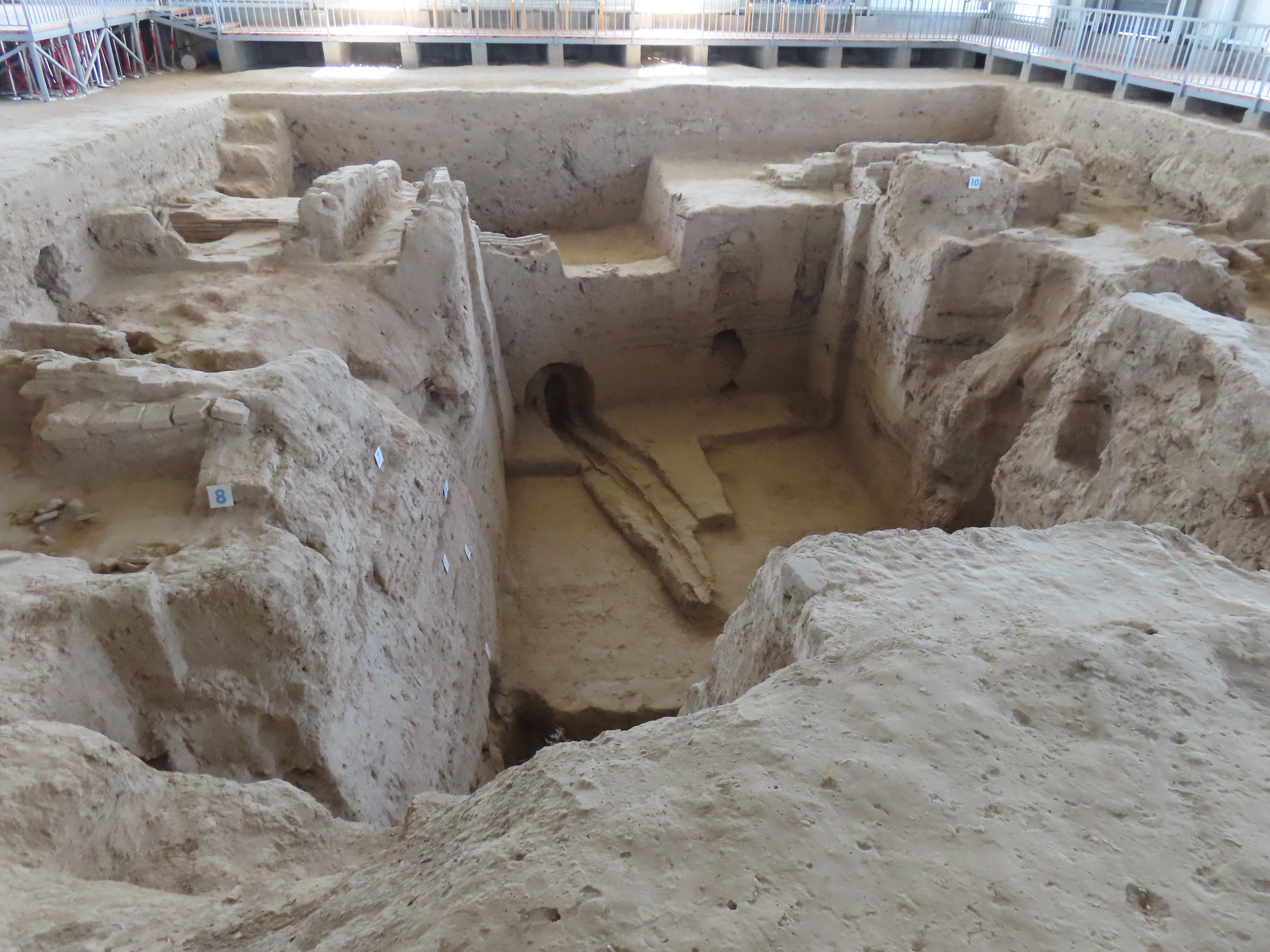
We took an Uzbekistan Airways flight from Tashkent to Termez, Uzbekistan’s archeological capital and one of the oldest cities in Central Asia. Visiting Termez was extremely important to me. Located on the other side of the Amu Darya from Afghanistan, the history of Termez is inseparable from the numerous invaders and conquerors that have marched through Central Asia. Alexander the Great invaded Termez in 329 BCE, the Umayyad Caliphate conquered the city in 676 CE, and Genghis Khan destroyed the city in 1220 CE. Visiting Termez was non-negotiable for me. We spent several days visiting Termez’s numerous archeological sites. Among the most impressive places we visited were the ruins of Alexandria-on-the-Oxus, founded in the 4th century BCE; Dalverzin Tepe, an ancient archaeological site founded by the Graeco-Bactrian Kingdom in the 3rd century BCE, which rose to prominence in the Kushan era; and Karatepa, a Buddhist monastery from the 2nd century CE.
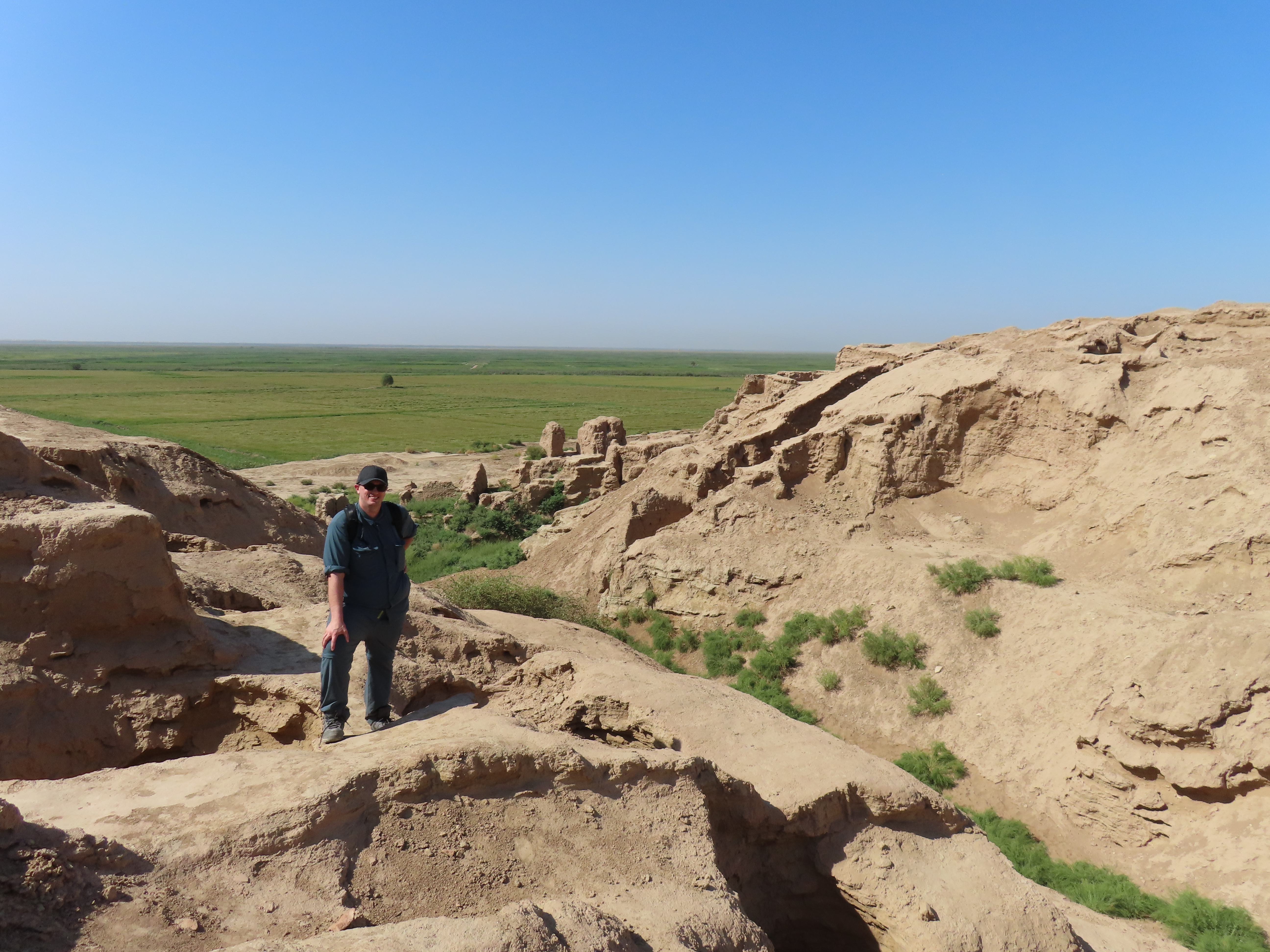
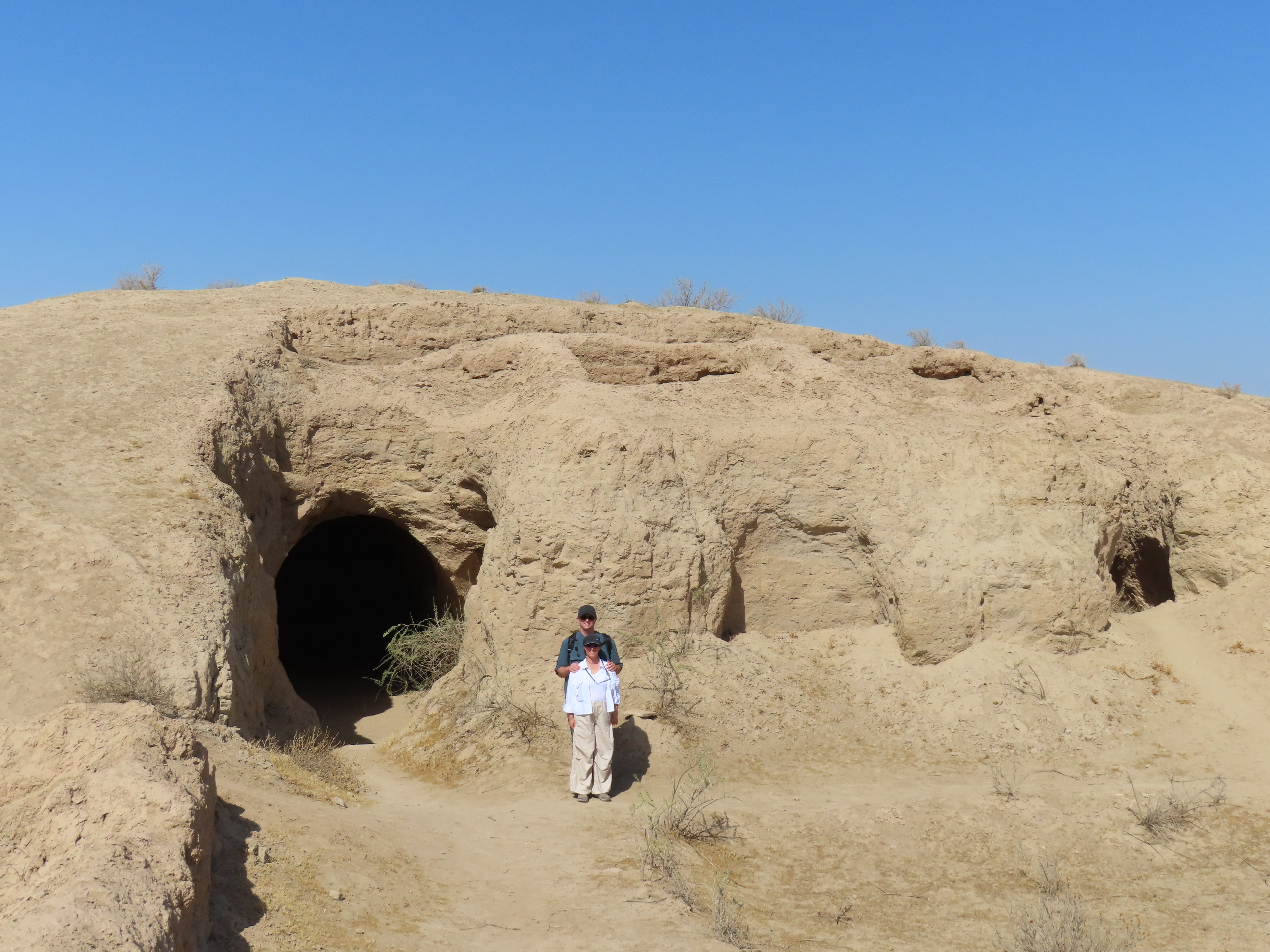
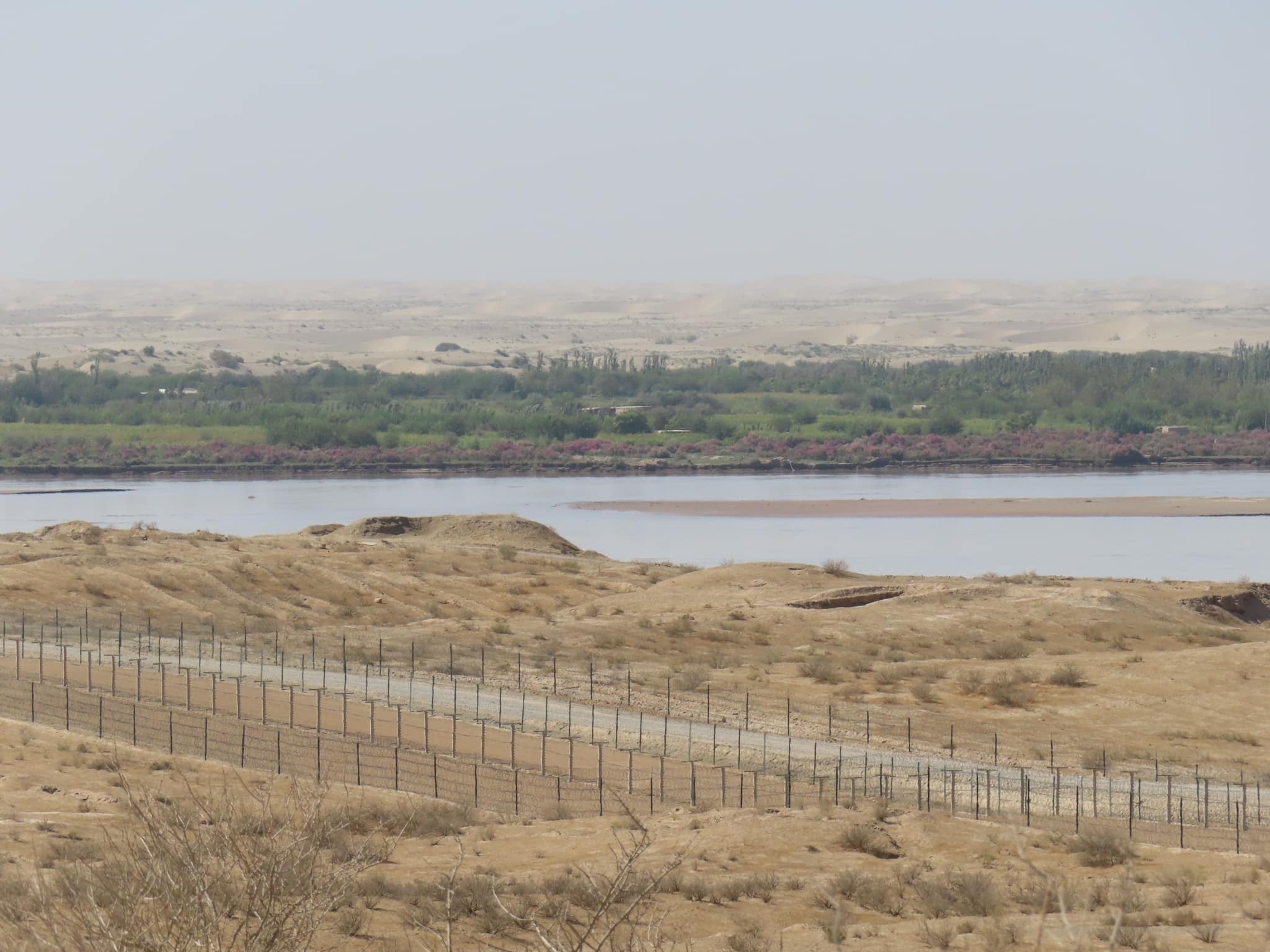
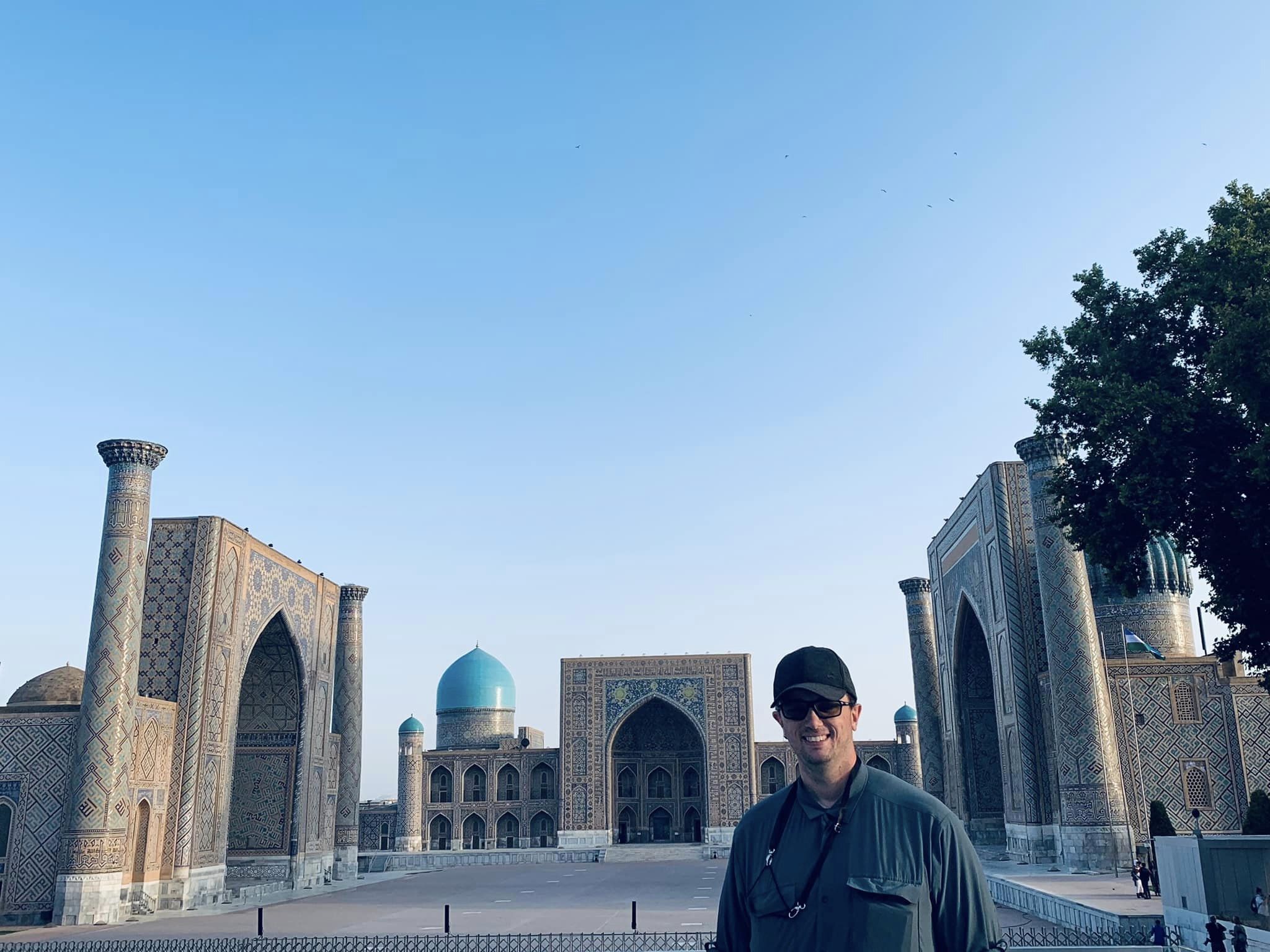
After a few days baking in the hot Termez sun, we made the 7-hour drive to Samarkand, the ancient capital of Uzbekistan and the 2nd largest city. Unfortunately, our visit to Samarkand would be short, with time for only a few of the most important sites. We visited the spectacular Registan Square, Tamerlane’s Mausoleum, the Ulugbek Observatory, and the ancient settlement and museum of Afrasiab before departing for a guesthouse in the Nurata Mountains. The mountain guesthouse was far away from roads and cities in a picturesque mountain area with fresh air, green orchards, singing birds, a sky full of stars, friendly people, and some very loud roosters. Although the guesthouse was lovely, the mattresses were not, and thankfully, we only spent a night there before we left for Bukhara, a mostly Tajik city in Uzbekistan, where we stayed at a beautiful but small hotel that used to be a madrassah. We visited many historical sites in Bukhara, including the Kaylan Mosque and Minaret, the Ark Fortress, Miri-Arab Madrasah, Ulugbek Madrasah, Abdullazizkhan Madrasah, Bolo-Khauz Complex, Samanids Mausoleum, and more. Once more, our visit to Bukhara was short, and we would have liked to have had more time to explore this beautiful city if we had the chance.

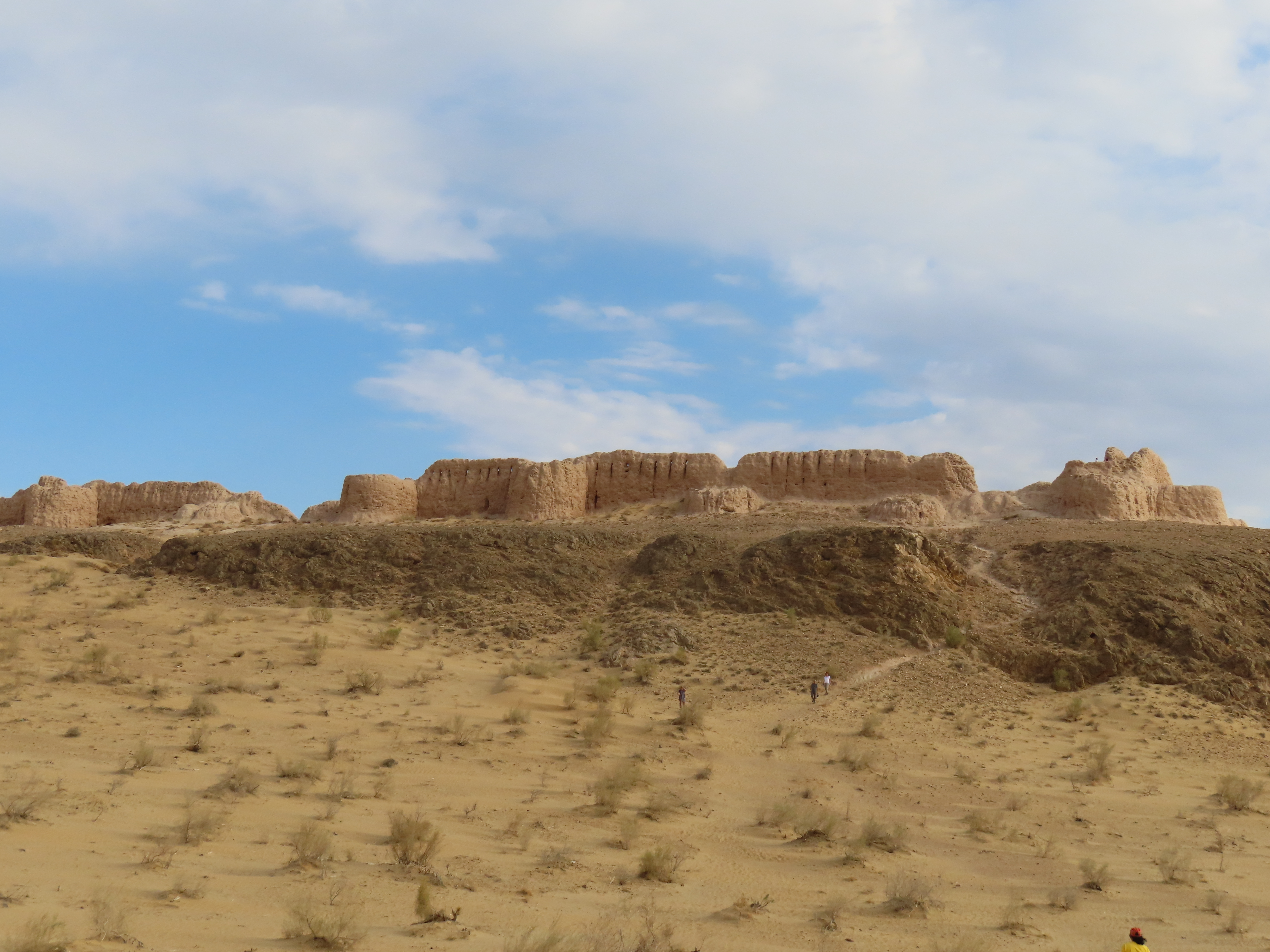
We next drove across the sandy Kyzyl Kum Desert to the famous Ayaz Kala Fortress in Karakalpakstan. Built between the 4th century BCE and the 7th century CE, Ayaz Kala consists of three fortresses overlooking the Kyzyl Kum Desert and was part of a system of fortifications protecting the agricultural settlements from attacks by nomads. We stayed at a yurt camp at the bottom of Ayaz Kala 1. The service was basic, but the view was excellent, as was the Karakalpak vodka, or so it seemed for those who drank it. Other ancient forts we visited in Karakalpakstan include Toprak-Kala, from the 1st-6th centuries CE, and Kyzyl-Kala, from the 1st-4th centuries CE. All of them were impressive archeological sites.

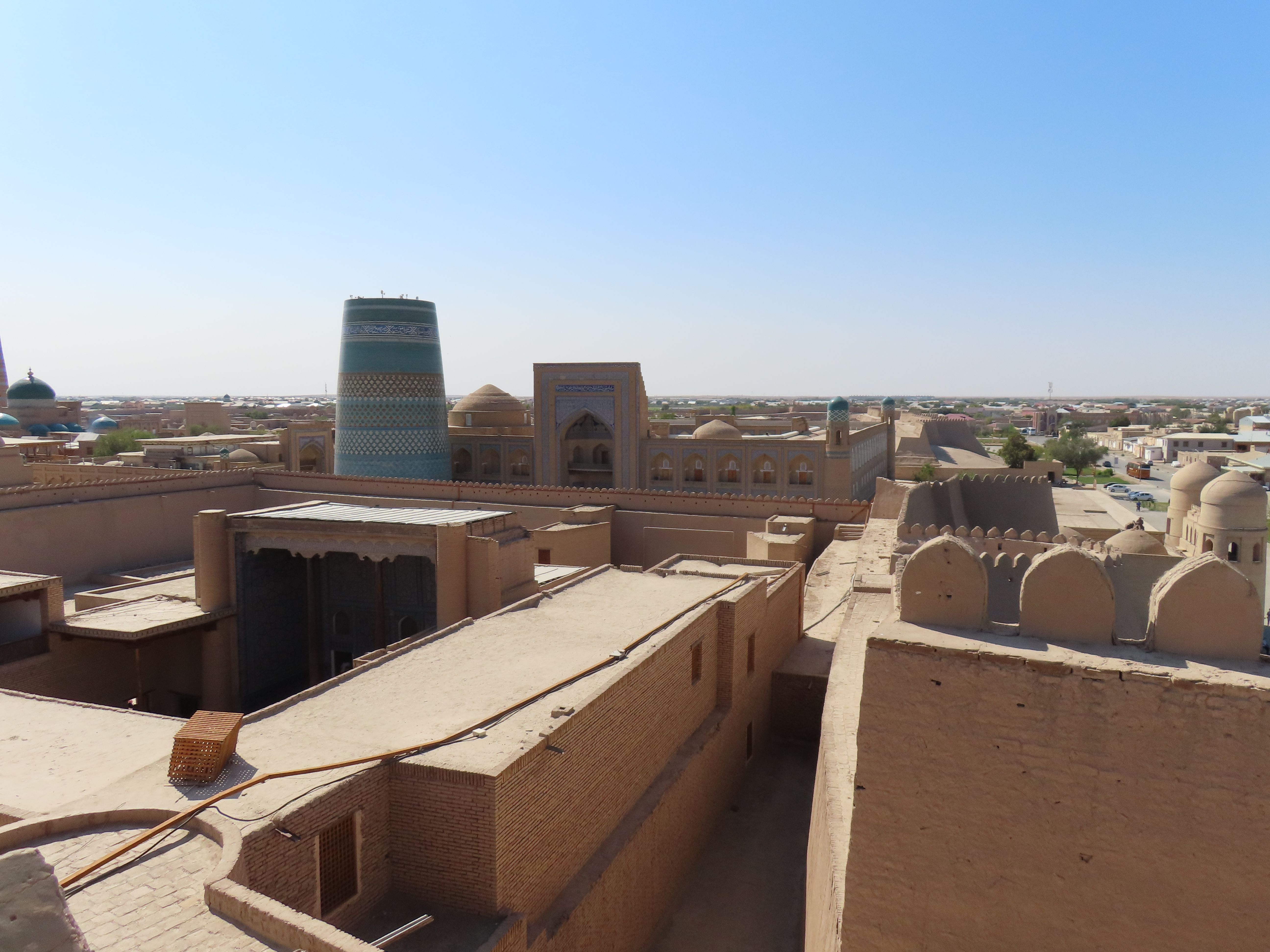
After Ayaz Kala, we left Karakalpakstan temporarily to visit the more touristy city of Khiva, one of Uzbekistan’s more famous tourist sites. Like in Bukhara, we stayed at another historical madrassah that was turned into a hotel, albeit much larger than the one in Bukhara, located inside the Itchan Kala fortress. We visited the Mukhammad Amin Khan Madrasah, Mukhammad Rahimkhan Madrasah, Kalta Minor, Juma Mosque, Toshkhovli Palace, Pakhlavan Makhmud Mausoleum, and Islam Khodja Minaret, the highest minaret in Uzbekistan.
Returning to Karakalpakstan, we made the 200-kilometer drive to Nukus, the capital of the Republic of Karakalpakstan. In Nukus, we visited the famous State Museum of Art, also known as the Savitsky Art Museum, which contains the world’s second-largest collection of Russian avant-garde art and exposition of Karakalpak applied arts items. After a night in Nukus, we began our long journey to the Aral Sea. The Aral Sea was once one of the largest lakes in the world. However, excessive irrigation of the Amu Darya River for cotton cultivation caused it to shrink and created an ecological disaster. On our way to the Aral Sea, we stopped in Muynak to visit the famous ship cemetery and Aral Sea Museum. After Muynak, it was nothing but off-road. Driving to the Aral Sea involves hundreds of kilometers of desert off-roading with only the stars and sun to navigate. We were part of a convoy of around 10 Toyota Land Cruisers, including Italian and Slovakian tourists.

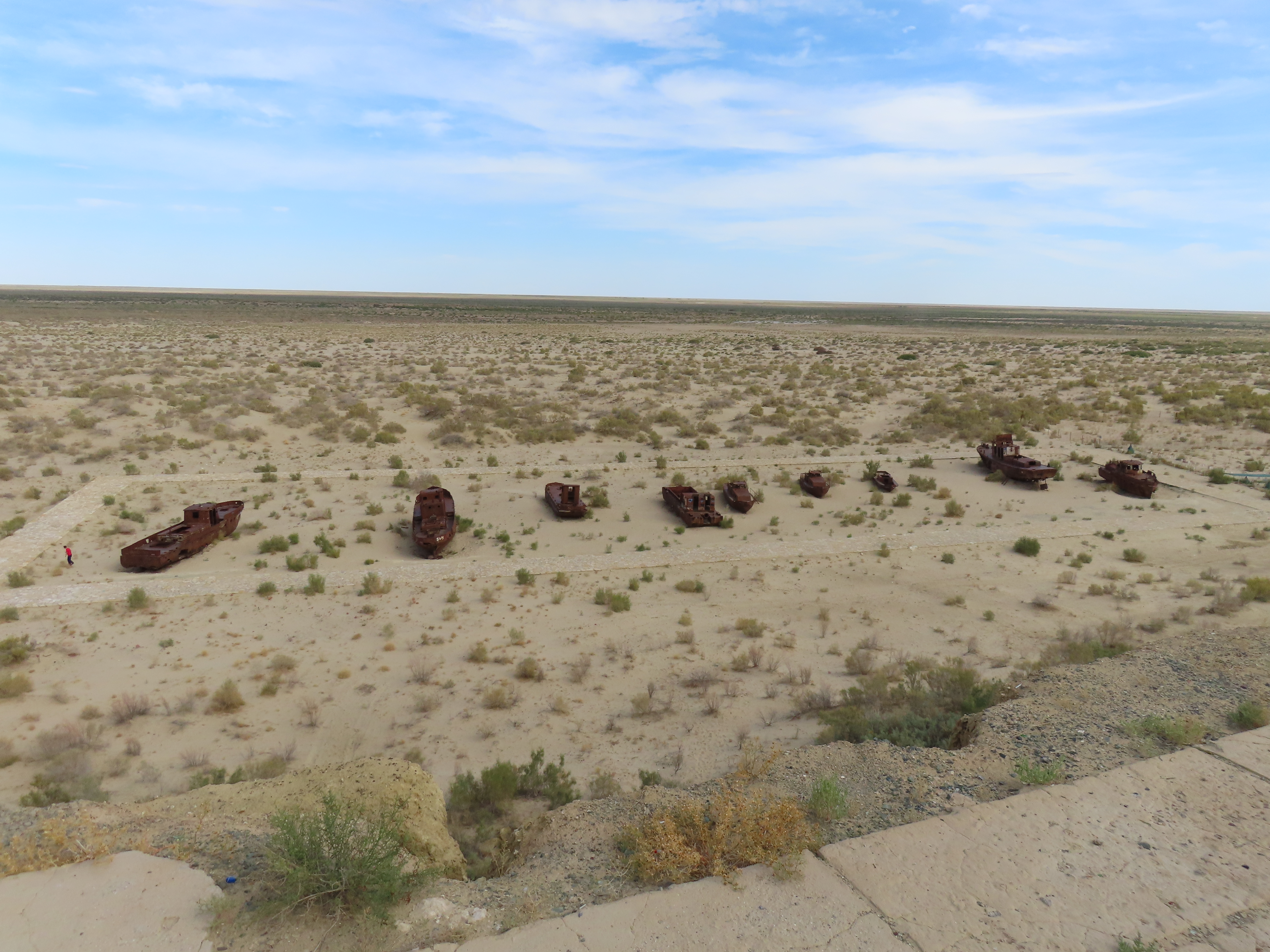

At the Aral Sea, we stayed in a more basic yurt camp than at Ayaz Kala, where we could see colourful flamingoes bathing in the Sea. In the morning, we watched the sunrise over the Sea before beginning the torturous off-road journey back to Nukus for our flight to Tashkent.
 T. J. Petrowski